Monica Ovalle’s two daughters dashed out the front door of their new Eastside home, examined the front stoop and headed to their backyard after seeing their bedrooms.
Read more How Texas law firms are redefining personal injury representation standards
Up until that morning, though, they hadn’t been aware they were moving out of their small, two-bedroom apartment.
Ovalle had spent months working through Habitat for Humanity’s homebuying program, building a house with volunteers and workers from the nonprofit.
At a home dedication on June 12, she showed her daughters the product of that work.
“My kids didn’t know anything about it,” she said. “I don’t have to worry about where my kids are going to sleep in the next couple of months.”
The first thing Ovalle says she wants to do is hang a photo of her family in the living room. The she plans to plant a garden with her daughters.
Ovalle is the first in her own family to own a home — none of her five other siblings have bought one.
She’s one of more than 1,500 families that have been able to get an affordable home by working with Habitat for Humanity of San Antonio and the Guadalupe Valley. The San Antonio affiliate was the very first homebuilder for the international nonprofit and this year marks 50 years of serving families.
Chief Development Officer Stephanie Wiese has seen the nonprofit grow from a group of volunteers to an organization with multiple locations and dozens of full-time staff in her 30 years with Habitat for Humanity.
She said the mission has always been the same: creating stable housing for families.
An international nonprofit tied to San Antonio
While many across the world know of Habitat for Humanity through its thousands of affiliates, San Antonio is home to the global nonprofit’s first home.
In 1976, the same year that missionary Millard Fuller founded the larger umbrella organization in Georgia, Faith Lytle, a local minister’s wife, gathered community members and started building a home in San Antonio.
Lytle saw a foundational need for stable housing among local residents, Wiese said, and wrote Fuller about starting a Habitat for Humanity affiliate in San Antonio.
Wiese said the early version of Habitat for Humanity was almost entirely volunteer based, building a few homes every year in vacant lots with support from a variety of community members, local churches and businesses.
“It takes a village to get people housed,” Wiese said.
Now, San Antonio is one of the largest Habitat for Humanity home builders in the country. It partners with local officials to build neighborhoods and create affordable housing opportunities, including working with the City of San Antonio’s affordable housing bond.
“Habitat for Humanity is a critical partner in the city’s efforts to expand affordable homeownership opportunities across San Antonio,” said Veronica Garcia, director of the city’s neighborhood and housing services. “Habitat helps families achieve long-term stability while strengthening our neighborhoods and communities.”
Years of scaling up
In its early days, Wiese said, volunteers often worked on homes one at a time. Each home was unique — infill development in vacant lots built with donations and caring.
“At that point, we were building one, two, three homes a year,” Wiese said.
Habitat for Humanity purchased its current headquarters on Probandt Street in 1993, where it has office space, a warehouse and a retail thrift store. Those stores sell new and used building materials and home decor and its profits fund Habitat’s administrative costs.
CEO and President Michael Taylor says the process has evolved into one that produces 50 to 60 homes annually. Each year 4,000 families apply for a home.
Taylor said they start acquiring land about three years before building starts. Sometimes they buy the land, other times it is donated. It can take a year to build out the streets, sidewalks and other infrastructure that are needed for a neighborhood.
“When you’re building 20 homes at a time, it makes sense to have them all at one location,” Taylor said.
Read more San Antonio’s historic Gunter Hotel joins Marriott’s Tribute Portfolio
Habitat for Humanity’s warehouse stores building supplies for around 20 homes, Taylor added. The nonprofit builds from four basic blueprints: a three-bedroom and four-bedroom layout and the mirror image of both those designs.
“We try to buy in large quantities when prices are low,” Taylor said.
That allows Habitat for Humanity to quickly scale up construction, gives the volunteers a reoccurring blueprint to work on and guards against price fluctuations that can hit the building industry.
For its 50th anniversary, Taylor and Wiese are leading a unique effort. The nonprofit is putting its speed to the test, seeking out 1,800 volunteers to build a home in just 50 hours this July.
Families and volunteers put in the work
Part of Habitat for Humanity’s program requires that new homeowners put in 300 hours of “sweat equity.” For Ovalle, that was its own pleasure. She learned a lot about construction, she said, and got to know the volunteers and Habitat for Humanity workers that worked on her new home.
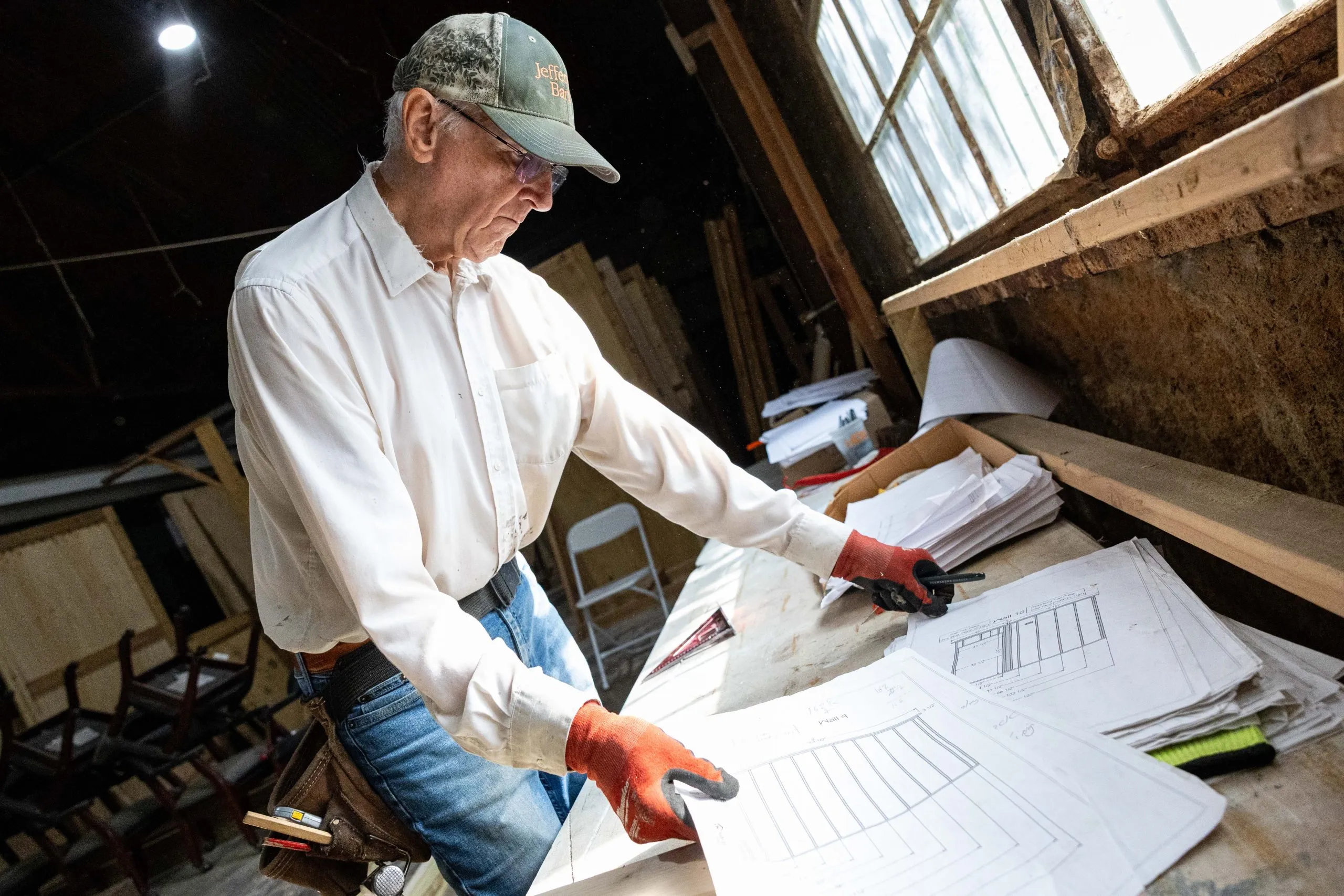
“The families are very appreciative of their house. It’s very fun to work with them,” said Al Poerner, who has volunteered at Habitat for Humanity for 25 years. “I always tell them, ‘I’d like to build it as if it’s my house.’”
Poerner started out volunteering on the side while serving in the U.S. Air Force. He wanted to learn how to build his own home. He soon saw the impact his volunteering had on new homeowners. He remembers seeing the excited faces of local children who would get their own bedroom for the first time.
“If I hadn’t been sold, I was sold then,” Poerner said. “It’s a good cause.”
As a home is being built, families spend six to nine months learning how to pay for and take care of a home. That includes basic maintenance, like replacing roof shingles, repairing walls and understanding how electric and plumbing systems work.
Building the home costs between $220,000 and $240,000, Taylor said, including infrastructure and land acquisition. The house costs around $145,000, and that’s what Habitat for Humanity asks prospective homeowners to pay through zero-interest loans.
It’s much lower than Bexar County’s median home price, which was $289,000 in May.
“The sponsorships are what allow us to sell a home for way below market value and finance those 0% loans,” Taylor said.
Impact for years to come
Ultimately, success is still up to the families, Wiese said. They have to help build the home. They have to pay their mortgage. Habitat for Humanity helps, but won’t do it all.
It’s not a process that works for everyone.
Each family is different, Wiese said. People can still run into issues in everyday life. Owning a home helps a lot, but it doesn’t completely eliminate job loss, mental health challenges, family disputes and other issues that can hit folks.
“It gives them an opportunity they didn’t have before,” Wiese said. “It’s in their hands.”
Regina Martinez saw that firsthand. She found out about Habitat for Humanity’s homeownership opportunities after she started working in the nonprofit’s retail thrift store as a cashier. She’s worked there for 17 years and is now a program assistant.
At first, she said, she didn’t qualify for a home because her credit wasn’t good enough.
“I abused credit cards at a very young age,” she said. “It took me two years to get that cleared up.”
Habitat for Humanity kept the door open, she said, and referred her to financial advisors who put her on the right path.
In 2013, she and her husband moved into their first home with their 2-year-old daughter.
Her family had never owned a home, she said, but the stability it’s created for her children has made a difference. They don’t have to move between apartments or sink money into rent.
“I remember when we first moved in and first laid down. You feel like it’s a hotel,” Martinez said. “It’s so unreal.”
“We’re able to provide for our kids in a way we did not have,” she said.