Commentaries at the San Antonio Report provide space for our community to share perspectives and offer solutions to pressing local issues. The views expressed in this commentary belong to the author alone.
Brackenridge Park is one of San Antonio’s treasures, and Lambert Beach is a key part of its landscape. Anyone who’s spent an afternoon there knows the beauty of the towering trees arcing over the river, the cool shade they provide, and the sense of place they create.
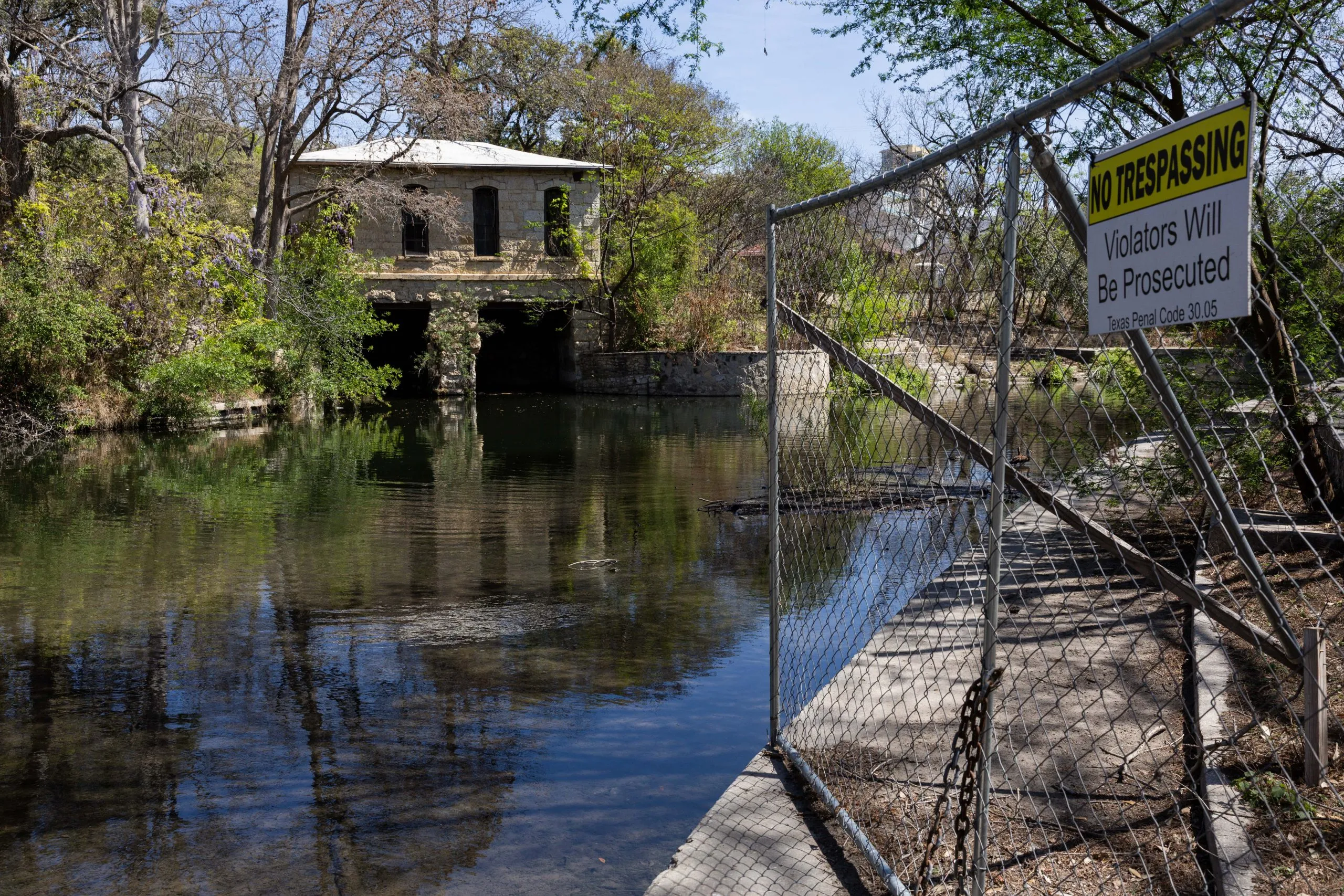
But for years the area has sat fenced-off, its wildlife and visitors driven off. And for years, the city has waged an expensive and protracted battle over this stretch of river, against the public, regulatory agencies and in the courts.
As San Antonio struggles with budget deficits and difficult choices about city services, taxpayers should ask why one park project, originally budgeted at $7.5 million, has already generated more than . Separately, in an attempt to get a required federal permit, the city has now produced three consultant-drafted Treatment Plans, in the same three-year period as the litigation, costing thousands more. And there’s no end in sight.
On June 26, attorneys from the University of Texas School of Law and First Liberty Institute, representing members of the Lipan Native American Church, in the Brackenridge Park litigation. The petition is only the latest chapter in a three-year saga that has already produced a district court ruling, an appeal to the Texas Supreme Court, two Fifth Circuit panel decisions, two en banc proceedings before the full Fifth Circuit, and now a petition for certiorari. All of this is only about preliminary relief; there has yet to be expensive discovery and trial.
The plaintiffs assert that the city’s plan to destroy trees along the river at Lambert Beach, including sixteen heritage and significant trees, along with the city’s campaign to deter cormorants from nesting there, violates their First Amendment rights. The members say that Lambert Beach remains a centuries-old sacred place where ceremonies are still conducted and that the presence of the trees and birds at the riverbend is necessary to exercise their religion.
The city has responded that the trees must be removed to repair the historic walls in place, something they claim is required by federal historic preservation standards. The city has refused to entertain engineering solutions less destructive to the trees, or to choose an engineering design that would allow the planting of replacement canopy trees on the banks. The city has also claimed that the bird deterrence, a campaign of pyrotechnics and eardrum-piercing board clapping, is necessary to keep birds from nesting in the project area until the trees can be removed.
The city has largely prevailed in court, but it has been no slam dunk. Every single decision has been split.
The most recent Fifth Circuit decision in particular should give residents pause. Eleven judges voted against the plaintiffs. But six judges joined a spirited dissent. “The City of San Antonio plans to destroy a sacred Native American religious site. The burdens on plaintiffs’ religious freedoms are undeniable,” they wrote.
They then asked a question that reaches far beyond this lawsuit and the money spent on it: “if we’re applying the same standard to people of all faiths, can it seriously be said that bulldozing a sacred site and artillery blasting the cormorants in a church’s creation story is somehow less burdensome [than infringements on other religions that the Court has struck down]? Why apply a different, less-protective [First Amendment] standard to people of Indigenous faiths?”
Those questions deserve answers, not just from the Supreme Court, but from San Antonio. Would the city be fighting as hard to tear down a chapel on public land?
At the same time, another process has been unfolding outside of public view. Because the project requires a permit from the U.S. Army Corps of Engineers, the city has been required to submit a Treatment Plan under the National Historic Preservation Act. These plans, available only through open records requests, serve as the project’s cultural resource assessment. The plan must identify historic and cultural resources, evaluate whether they will be adversely affected by the project, and provide the framework for consultation among the Army Corps, the Texas Historical Commission, sovereign Tribal governments and other consulting parties to avoid or mitigate identified adverse effects. The consultation and any redesign or mitigation must be determined before a permit can be issued.
The first plan, submitted in summer 2023, covered a larger project area — the original “Phase 1” of the 2017 bond project. It contemplated removing 48 trees, including the 16 heritage and significant trees and one smaller tree from the north bank of Lambert Beach that is the subject of the lawsuit.
The Comanche Nation, a consulting party, sought consideration of the significance of the landscape as a Traditional Cultural Property, a designation that may be recognized under the National Register listing equivalent to the walls and other built structures.
The most recent plan for the area, submitted in December 2025, seeks to address those concerns. But the current plan for the north bank appears to describe a substantially different project than the 2023 plan for that area, or the one presented to the public and defended throughout most of the litigation.
Read more Where I Live: Lower Southeast Side
According to the new plan, only “[s]ix trees will be removed on the north bank of the river, and the remainder will be left in place.” The plan repeatedly emphasizes preservation of the remaining canopy and wildlife habitat. The newest plan states that the project has been designed to “maximize the number of trees that can be left in place,” concludes there will be “little impact” to migratory bird habitat, and states that “the habitat will not be destroyed.”
The new Treatment Plan makes another significant change, however. It dramatically narrows the project’s footprint to just a few feet back from the river along most of the wall, leaving a number of trees — including two of the largest heritage oaks — outside the new project boundary, while seven others are not clearly in or out.
The city has never publicly explained those changes. If it is now telling federal regulators that most of the historic canopy can remain, why did it spend three years arguing in court that extensive tree removal was unavoidable?
Or has the city attempted to narrow the federal permit in a way that reduces the scope of Army Corps review and therefore minimizes the required consultation with Tribal governments? If that is what happened, the question is larger than permitting strategy. Does San Antonio want to resolve concerns raised by a sovereign Tribe through jurisdictional gamesmanship?
Like the questions posed by the six dissenting judges, these questions deserve answers, too.
When asked, the city did not confirm its intent to preserve trees that now fall outside the project boundaries. A spokesperson with the city stated that it “continues to participate in the required consultation process in good faith and will carefully consider any concerns raised.”
Consultations, like the litigation, remain ongoing.
Still, if the city now intends to preserve substantially more trees, these changes suggest that there may be a path to resolution for the litigation and the project. But transparency is required.
It’s worth recalling that citizen protests against the tree removal in 2022 caused two years of delay even before the litigation and permitting problems arose. An Assistant City Manager publicly apologized for the city’s missteps in seeking tree removal waivers.
The city acknowledged that public trust had broken down. It spent approximately $150,000 developing a Brackenridge Park Reconciliation Plan, which concluded that future decisions should put nature first and rebuild trust through meaningful collaboration. A Stakeholder Advisory Group was created to help implement those recommendations.
Yet when Lambert Beach moved forward, city officials concluded that neither the Reconciliation Plan nor the Stakeholder Advisory Group would guide the project. After spending $150,000 to rebuild public trust, the city returned to the same top-down decision-making that had produced the controversy in the first place.
The Stakeholder Group could provide a way forward here. Comanche Nation concerns and the existence of a Traditional Cultural Landscape should be considered whether or not strictly required to get a permit. Indigenous First Amendment rights should be considered whether or not the Supreme Court takes up the case and the city spends millions more in legal fees. Historic landscape preservation can be addressed and a long-term solution for the rookeries — not the city’s expensive annual artillery — found.
The existing walls continue to deteriorate. Just since the litigation began, left without basic maintenance or temporary bracing, portions of the walls have developed large cracks, while other sections have collapsed, resulting in the removal of additional mature trees. The longer this dispute continues, the less convincing the city’s insistence becomes that every remaining section of wall must be preserved exactly where it stands. It’s time for a new approach before neither the trees nor the walls can be saved.
One hundred years ago, San Antonio built these walls to preserve the trees. Today, good engineering and design can preserve both. After three years of litigation, three Treatment Plans and more than $2 million in legal fees, the city appears to be describing a different project than the one it spent years defending in court.
If that reflects a genuine redesign, it should explain it. If it does not, it should explain that too. Either way, San Antonio deserves transparency and a stakeholder driven solution for the park before another dollar is spent on appeals.
Read more San Antonio, police union reach tentative agreement on new contract after months of negotiations