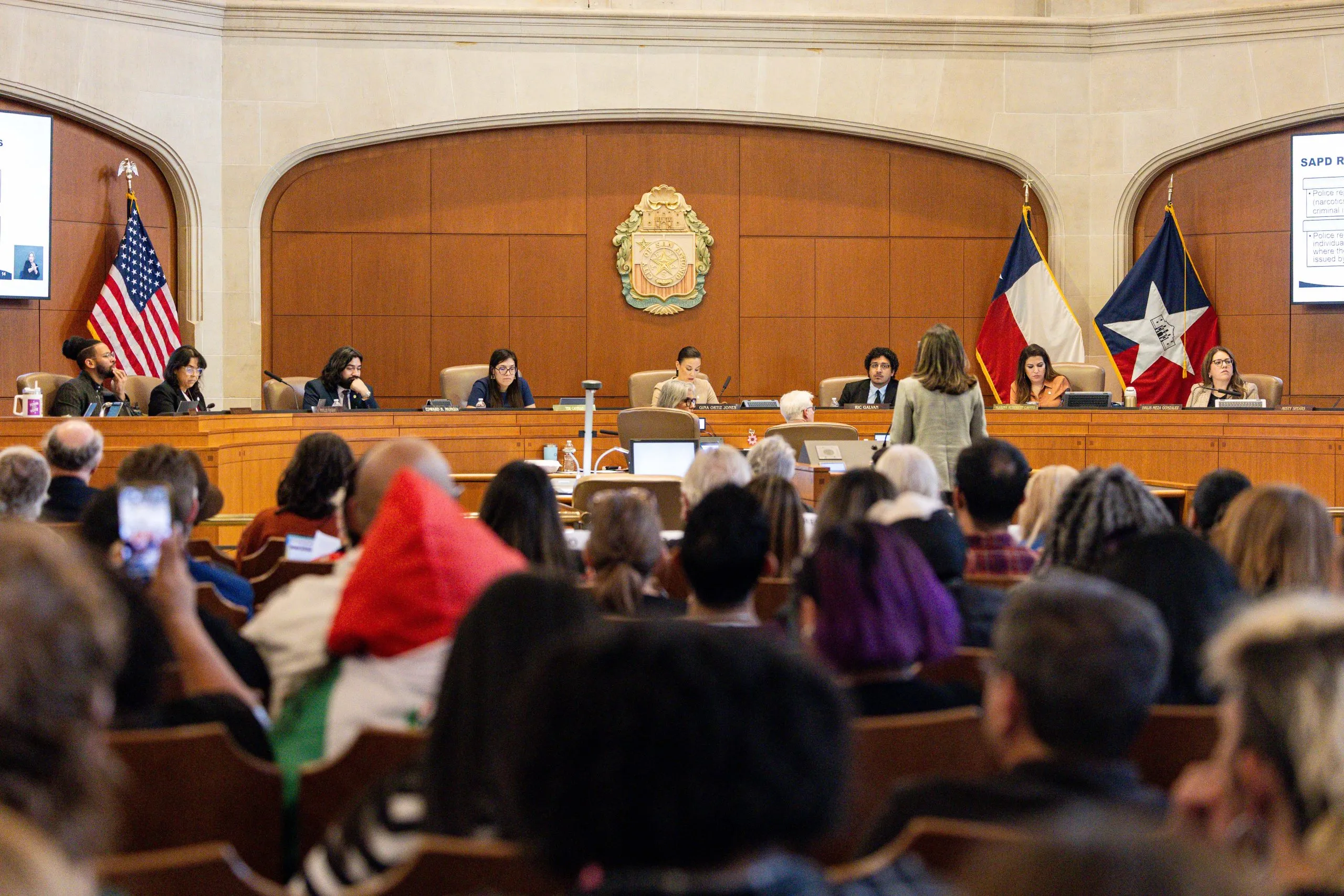
Fundraising for most of San Antonio’s City Council members has slowed to a trickle, with many donors already maxed out and unable to give again until June 2028.
Read more UIW opens third university site in México with new campus in León, Guanajuato
That could soon change, however, as the city’s Ethics Review Board faces pressure to increase their contribution cycles leading into the next municipal election.
San Antonio currently holds its candidates to far stricter donor limits than those running for county, state and federal offices, capping the amount City Council hopefuls can collect from a single donor at $500 per election cycle, or $1,000 per cycle for mayoral candidates.
While there’s long been grumbling about whether such limits truly level the playing field, complaints appeared to reach a boiling point when the council and mayor moved to four-year terms last year — and many donors were suddenly maxed out still years away from the next election.
Most weeks at City Hall, jockeying for a 2029 mayoral race appears well underway already, with constant clashes between progressive Mayor Gina Ortiz Jones and her more business-centric colleagues.
But semi-annual campaign finance reports due this week showed relatively little money raised for such a contest during the first half of 2026, at a time when some council members are eager to start building up their war chests.
Most of the 10-member council raised less than $15,000 between Jan. 1 and June 30.
Councilman Marc Whyte (D10), who uses a professional fundraiser to help him raise money, was a major outlier, . But he said the changes have made it tougher for everyone, and caused concern among some members who want to revisit the issue before they’re on the ballot again.
“The contribution cycle, the way it is now, probably has slowed down fundraising,” Whyte said. “I do think there’s some desire from council members to have all these things relooked at and potentially make fundraising easier in those three years before the actual election.”
The Ethics Review Board has now met twice to discuss revisiting the rules, including potentially raising the maximum contribution limits and allowing donors to max out multiple times per year instead of once per election cycle.
Critics say it would dramatically increase the power of incumbency — allowing council members and the mayor to stockpile lobbyists’ cash years before other candidates have even started assembling their campaigns.
But the Ethics Review Board’s members are appointed by the council members, some of whom consider the changes critical to avoiding a repeat of 2025.
San Antonio’s last mayoral race saw millions in PAC spending for Jones and former Texas Secretary of State Rolando Pablos, who leapfrogged into a runoff while four sitting council members struggled to gain traction.
Read more Brackenridge Park’s $2 million question
‘Dawn of a new era’: 2025 mayor’s race among the most expensive in history
“I know that there’s concern on council, and I know that there’s concern in the business community,” Whyte said of the shifting dynamics in San Antonio’s most recent mayoral race.
“If you have one candidate who is going to raise hundreds of thousands of dollars from outside of San Antonio and outside of Texas, how can a local candidate who has a lot of support here in our region compete with that?”
While some council members were still collecting checks from lobbyists and other donors in the first half of 2026, Jones and reported about $25,000 on hand as of June 30.
But she remains close with powerful political allies from her two congressional bids before this, many of whom came in big to help her mayoral race last year.
Jones did not respond to a request for comment about her fundraising or the Ethics Review Board’s potential changes.
Reading the tea leaves on fundraising
By 2029, three council members will be term-limited from seeking reelection to their current positions: Jalen McKee-Rodriguez (D2), Phyllis Viagran (D3) and Teri Castillo (D5).
They were first elected in 2021, and by the end of this term will have reached the maximum of eight years on council. They could run for mayor instead, but none appeared to be raising much money on their latest reports.
- McKee-Rodriguez said he raised about $7,200 and had about $3,500 in the bank. He indicating less than that, but said he was amending it to add some additional checks.
- and reported $11,400 on hand.
- and reported about $30,000 on hand.
A second set of council members, first elected in 2023, will also run into issues of eligibility in 2029, forcing them to run for an abbreviated term if they seek reelection to their current role.
That group is amassing far more campaign funds, signaling they could potentially run for mayor or another office instead.
Councilmembers Sukh Kaur (D1), Marina Alderete Gavito (D7) and Whyte were each first elected in 2023, and then reelected in 2025. The new four-year terms mean that they’ll only be able to serve half of that if they’re reelected, while everyone else running for the seat that year would be eligible to serve the full four years.
- about $15,000 and reported $58,000 on hand.
- Alderete Gavito’s campaign said she raised $28,600 and had about $78,000 on hand. As of Friday, they were still working on submitting her report.
- and reported $172,000 on hand.
The remaining four council members are freshmen who were elected in 2025: Councilmembers Edward Mungia (D4), Ric Galvan (D5), Ivalis Meza Gonzalez (D8) and Misty Spears (D9). They’re eligible to seek another four-year council term in 2029.
- and reported $2,100 on hand.
- and reported $6,800 on hand.
- and reported $10,400 on hand.
- and reported $6,300 on hand.
The next campaign finance reports are due in January 2027, since the council voted in 2024 to report their contributions and spending less frequently.