As President Donald Trump’s administration forces an end to race- and gender-conscious contracting preferences, governments at every level are ramping up their goals to award more contracts to veteran-owned businesses instead.
Read more San Antonio researchers find microplastics may act as carriers for harmful chemicals
There’s just one problem, however: finding enough veteran contractors who have the certifications to complete the work.
Top officials from Trump’s Small Business Administration are now scrambling to fill the gaps as the federal government ramps up its own goals for small veteran-owned businesses — and could soon go even higher.
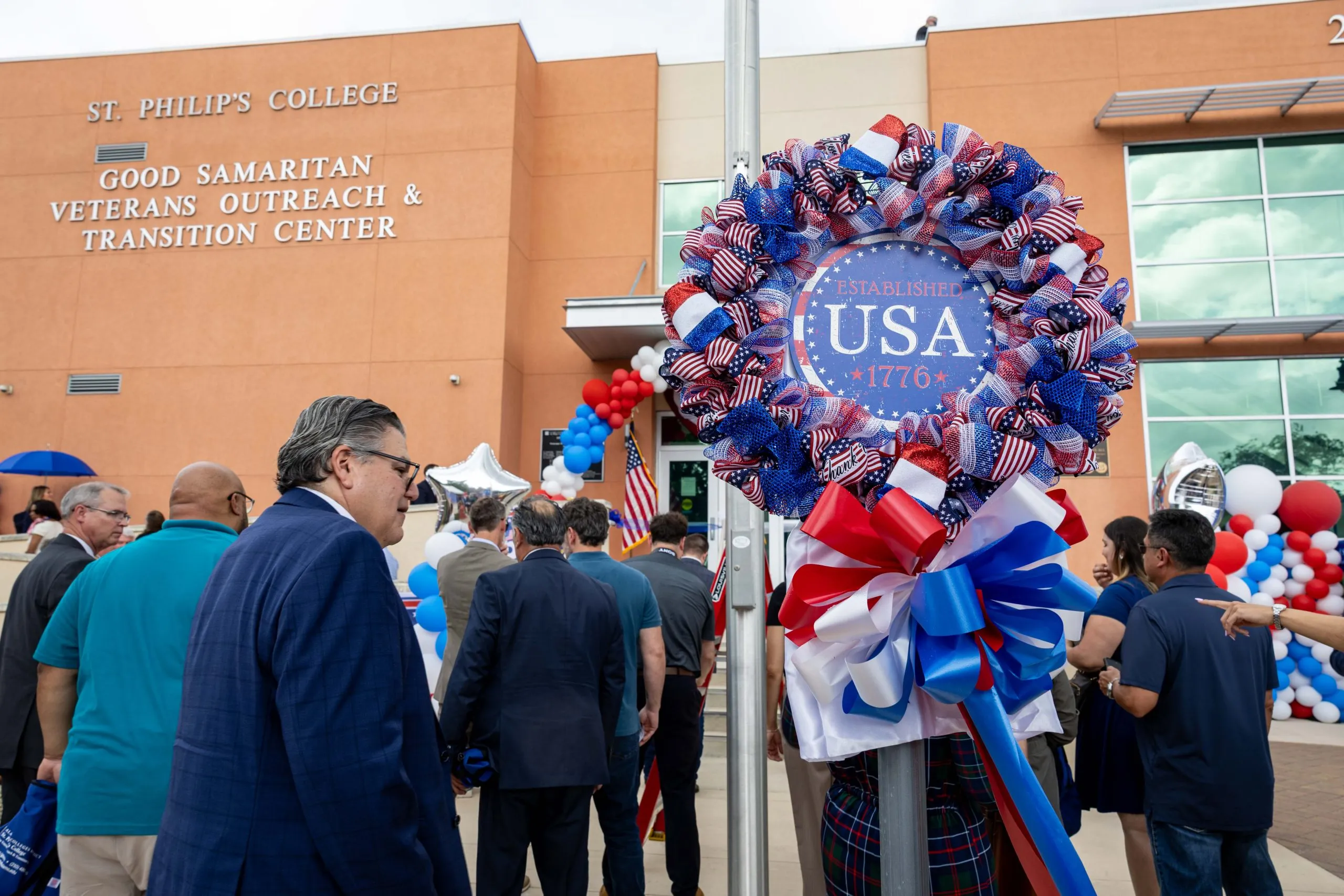
Beneath an arch of red, white and blue balloons on a sticky Friday morning, Trump’s SBA Administrator Kelly Loeffler visited San Antonio to personally christen a new Veterans Business Outreach Center [VBOC] that her office is standing up at St. Philip’s College.
The agency has long operated centers across the country that help mentor veterans as they start and grow their businesses, including one in the Rio Grande Valley and one in Arlington.
But the San Antonio location is the first of its kind in response to rapid policy changes happening in federal government contracting.
The city has one of the nation’s largest concentrations of veterans — as well as roughly 80,000 active-duty service members who could open businesses as they transition into civilian careers.
SBA’s new center is designed to help them build and grow businesses that could compete for federal contracts under the same roof where the Texas Veterans Commission already has staff doing similar work for state contractors.
“Now that the VBOC will fall under us, we’re going to have wraparound services, said Megan Tamez, director of the state’s Veterans Entrepreneur Program. “I’ll have [Texas Veterans Commission] on the lower level, and then once they’re done receiving those services, they’ll walk to the next office and receive the higher level services.”
The administration plans to spend $1 million opening three satellite locations in Texas before the end of the year, including San Antonio, Houston and El Paso.
More are planned for Florida, California and Louisiana, where they also hope to churn more small businesses out of states with large veteran populations.
“There’s no better place to launch than right here in San Antonio, in Military City USA,” Loeffler told the crowd at the June 12 ceremony. “… As we rebuild and re-industrialize America … we know that veterans are going to come first.”
The end of the DEI era
The race to incentivize veteran businesses comes as most other types of business support programs are quickly being shuttered.
Since returning to office in 2025, Trump has threatened to withhold federal grants from any government that keeps race- and gender-conscious contracting goals on their books.
Against that backdrop, women- and minority-owned business programs built over the past three decades have been scrapped and replaced almost overnight with programs favoring veteran-owned businesses instead.
In December, Texas slashed women- and minority-owned businesses from the state’s Historically Underutilized Business Program, leaving service-disabled veteran business owners as the only eligible participants.
A judge temporarily reversed the decision after excluded businesses sued. But if the state succeeds in its effort, only about 575 of the 11,000 vendors in the state program that are certified as veteran-owned will be eligible for the program, according to the Texas Veterans Commission.
This month the Small, Minority, and Women-Owned Business Enterprise policy it’s had on the books since the early 2000s with a program aimed at helping small, local and veteran-owned businesses.
San Antonio was already phasing out some race-and gender-based preferences before Trump’s return to office last year, but suspending the program indefinitely in September of 2025.
Like the county, it has since implemented veteran contracting preferences instead.
“[San Antonio] had a very robust SBEDA program for years, and that’s what everybody was focused on — reducing discrimination and reducing race- and gender- based barriers to doing city work,” said Colette Holt, who owns a business providing legal counsel to San Antonio and other governments using contracting programs to support minority, women and disadvantaged businesses.
“That’s been paused, so people are pivoting.”
Turning to Texas
With federal goals for veteran-owned businesses also increasing, expectations for the new VBOC are quite high, according to Kevin Barber, a Houston energy executive whose been tasked with overseeing the effort.
Five months ago Barber was serving as vice chair of the Texas Veterans Commission, which helps veterans formulate business plans and register with the state to get free franchise taxes.
Then Trump’s Small Business Administration tapped him to crank up its veterans business outreach, and his home state has been a major beneficiary.
Barber went to work installing VBOCs in places where the Texas Veterans Commission was already doing business mentorship and state certifications, like the Good Samaritan Veterans Outreach & Transition Center at St. Philip’s College.
Read more Dad knows best: Father-daughter real estate agent team leans on each other’s talents, wisdom
“We’ve always had some support for entrepreneurs [at the state level], but what we missed out on was the next step, which is funding for their businesses and getting SBA loans,”said Laura Koerner, a former Fair Oaks Ranch councilwoman who chairs the Texas Veterans Commission.
“We had an amazing opportunity when one of our fellow commissioners got into that role.”
Now Barber serves as assistant administrator for the SBA’s Office of Veterans Business Development.
He said a three-person staff at the new San Antonio VBOC location is expected to interface with 500 veterans or military spouses in the first year — andconvert about 10% of those to business owners.
Those goals come as the federal government’s goals for the percentage of its contracts going to small veteran-owned businesses went from 3% to 5% in the past year, and may even go higher soon.
“We’re putting a lot of investment into training veterans for not just government contracting, but commercial contracting as well,” Barber said.
‘They should be concerned’
Experts say that policymakers are right to worry about filling their new quotas for veterans.
“They should be concerned about capacity, because we don’t know how many veteran-owned firms are out there, and we don’t know what industries they’re in,” Holt explained.
Her business has long helped create the disparity studies that governments — including the city of San Antonio — use to measure the types of businesses that exist in their communities against the rates at which they’re being selected for contracts.
Holt said that women- and minority-owned businesses have long jumped through certification hoops to participate in government contracting programs because it helped them gain a foothold in markets where they faced discrimination.
Meanwhile veterans haven’t faced the same challenges doing business on the open market — and haven’t been as motivated to pursue government contracts, Holt said.
The state of Illinois and the city of Chicago have both had a 3% veteran goal for at least a decade, yet contractors still routinely get waivers to meet those goals because they can’t find enough firms.
“[Veterans] don’t perceive that they need any kind of a program,” Holt said. “The pool is very, very shallow for those who’ve been certified already.”
Ahead of the curve
Local policymakers who’ve already been working to encourage more small businesses to set up shop in San Antonio said the launch of the SBA’s new VBOC center this month came as a surprise.
But they overwhelmingly agreed that having it here is a smart move — in part because so much work has already gone into improving the city’s small business ecosystem.
“We should be the veterans’ procurement capital of the country, because we have the largest veteran community here,” said Melanie McCoy, a U.S. Army veteran who runs the nonprofit Supply SA, which aims to simplify the local procurement processes in San Antonio.
San Antonio had a head start in transitioning its race- and gender- preference programs into a broader effort to help small businesses share in the wealth of lucrative government contracts — because its three-decade old affirmative action program had been so successful it no longer had the legal standing to keep it in place.
As part of that effort, a group of local government agencies stood up Supply SA to help carry such entrepreneurship programs into the future.
SupplySA took over and revamped the troubled South Central Texas Regional Certification Agency (SCTRCA) that caused businesses to wait as much as seven months to get their certifications.
Now businesses are getting certified at the Boeing Tech Center in 30 days or less, McCoy said, the addition of a VBOC in San Antonio is the natural next step for a community where entrepreneurship is already on the rise.
“It’s great that they’re opening this veteran business outreach center here, because we really did need one,” she said
McCoy would know. She started her own consulting business several years ago, and had to drive all the way to Arlington for VBOC services.
“We should be trying to maintain and keep the service members that are exiting [duty] here, kind of like how I settled here,” she said. “There’s just so much opportunity for veterans.”
Read more Kanye’s last-minute Alamodome show faces pushback over anti-semitic comments