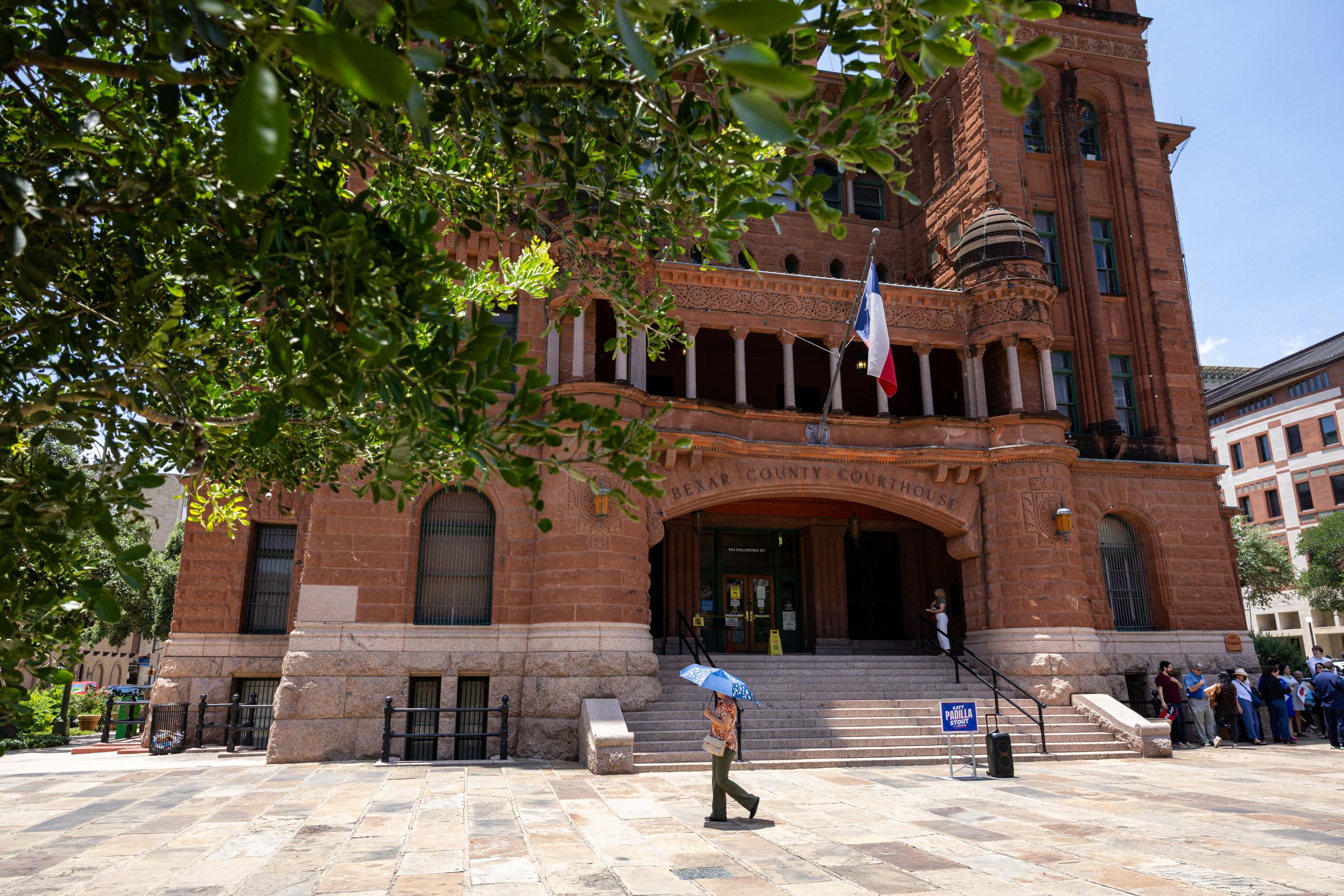
Bexar County leaders entered this budget season determined to avoid a tax increase.
Read more Alamo Colleges District eyes higher tax rate amid enrollment growth, budget pressures
Now that they’ve seen what declining revenue does to their budget, however, commissioners will soon have to decide whether it’s worth it to stay the course.
On Tuesday, county staff for a that includes no cost of living increase for county staff, funds only a handful of critical infrastructure projects, and pulls money out of the rainy day fund to maintain popular pandemic-era programs.
County Manager David Smith said it was intended to give commissioners a “baseline” from which they can make adjustments if they choose.
“You may well decide that this rather austere budget we’re presenting today is unsatisfactory for this organization — I understand that fully,” Smith told the commissioners.
But Smith, who has been the county’s chief budget officer for many years, also spoke at length about future expenses he said could soon eclipse the priorities commissioners are looking at today.
Explosive growth in the county’s unincorporated parts will soon require a major infrastructure program for roads and flood control, he said — something the county hasn’t done since 2007, when the population was much smaller and costs were lower.
“I’m seeing over the next five to 10 years, legitimate requests and demands that the growth is creating on this county that could easily be multiple billions of dollars in capital need,” Smith said. “That’s simply not going to be financed —or I don’t know how you would finance it — with our existing tax rate.”
He also warned that the county’s cautious approach to artificial intelligence will eventually lead to information security issues if they don’t start spending money to get ahead of it.
“One of the reasons I’m here today proposing a budget to you that is built on no change in the tax rate, is because I want the court to begin to consider what I believe will be major challenges that you will face in the future,” Smith said. “These were kind of the things that were on my mind as I was working with staff to develop this recommendation.”
The rare revenue deficit
Like other taxing entities, Bexar County enters this budget cycle with slowed property tax revenue from a cooling real estate market.
On average, Bexar County homes decreased in value 0.11% in 2026.
But unlike the City of San Antonio, which is largely already built out, Bexar County has long been able to rely on new development in its more unincorporated parts to buoy revenue in a tough economy.
This year that changed for the first time in recent memory, with the county on track to than it did the previous year.
“We don’t often experience a literal drop in property tax revenue,” Smith told commissioners Tuesday. “We’ve experienced declining growth. We’ve experienced stagnant growth. But a literal drop — even though it’s a small one — is unusual for us.”
That dynamic set Tuesday’s budget discussion on a strange course from the beginning, as Tax Assessor-Collector Albert Uresti he’s required by state law to lay out.
Among the steps Texas took to rein in municipal spending during skyrocketing property values was requiring a public showing of the tax rate officials would need to set if they wanted to keep revenue even from the previous year.
This year a process intended to shame them showed that Bexar County would actually have to raise taxes to meet the so-called “no new revenue rate” — from about $0.30 per $100 of valuation to $0.31.
Read more Which San Antonio school districts have tax measures on the ballot this November?
Commissioners could even raise the rate considerably — as much as $231 per year on the average home valued at $341,000 — without having to seek permission from voters, Uresti said.
It’s a scenario even the most seasoned commissioners hadn’t seen before — after years of lowering the tax rate and creating new exemptions to stay under the state’s revenue caps.
“This is always a part of our budget process where we all look a little glazed over because all the numbers,” Commissioner Justin Rodriguez (Pct. 2) said Tuesday. “But I think the most important thing you mentioned at the end is … revenues will be down if we keep the existing tax rate as is.”
A shrinking cash reserve
Bexar County has already spent the past three years trying to shrink a budget that grew by $1 billion dollars during the COVID-19 pandemic — from about $1.8 billion in the 2020 fiscal year to nearly $3 billion by fiscal year 2023 — as the county took in a windfall of federal pandemic relief funds.
Now property tax revenue is cooling dramatically at the same time federal pandemic relief dollars are expiring, however, and the county’s elected leaders appear no closer to consensus on how they want to address it.
Tuesday’s proposed budget would continue making moderate shifts that Smith said won’t impact services for residents — coming in at about $2.6 billion compared to $2.8 billion budget last fiscal year.
But it still leaves many major policy decisions up to commissioners, who must eventually either work pandemic-era programs into their budget or make tough decisions to wind them down.
As ARPA funding decreased in past budgets, the county has used its contingency fund to pick up the tab, taking its balance from $408 million three years ago to $234 million headed into this budget cycle.
This year’s budget proposal calls for continuing that practice to pay dozens of staff members whose ARPA-funded salaries run out at the end of the year, including those working in domestic violence courts, the county’s preventative health department and the SMART team that responds to mental health calls, to name a few.
Most commissioners have expressed support for keeping those programs, but in multiple budget cycles haven’t identified what they’d cut to make it happen.
They also haven’t ever combed through their capital budget as staff has asked them to for two years, leaving old projects on the books that could be reprogrammed to fund more urgent priorities.
“There are projects out there that I think everybody on this court knows are not going to be completed, and there’s not the political will for them,” Commissioner Grant Moody (Pct. 3) said on Tuesday. “When are we going to think about shifts on the capital plan? … I think that’s a valuable discussion.”
Most commissioners during the meeting said that they also want to find money for cost of living increases for county staff — another expense that would require spending cuts or higher taxes.
The county has two work sessions scheduled before approving a final budget Sept. 15.
“They haven’t raised the tax rate in 30-plus years, and I’m not assuming they will in producing this,” Smith said. “But with this proposed budget, they know more or less what I think that would look like, and they can decide whether that’s an appropriate budget for the county next year or not.”
Read more San Antonio’s first crisis nursery opens with a collaborative ‘Puro San Antonio’ model