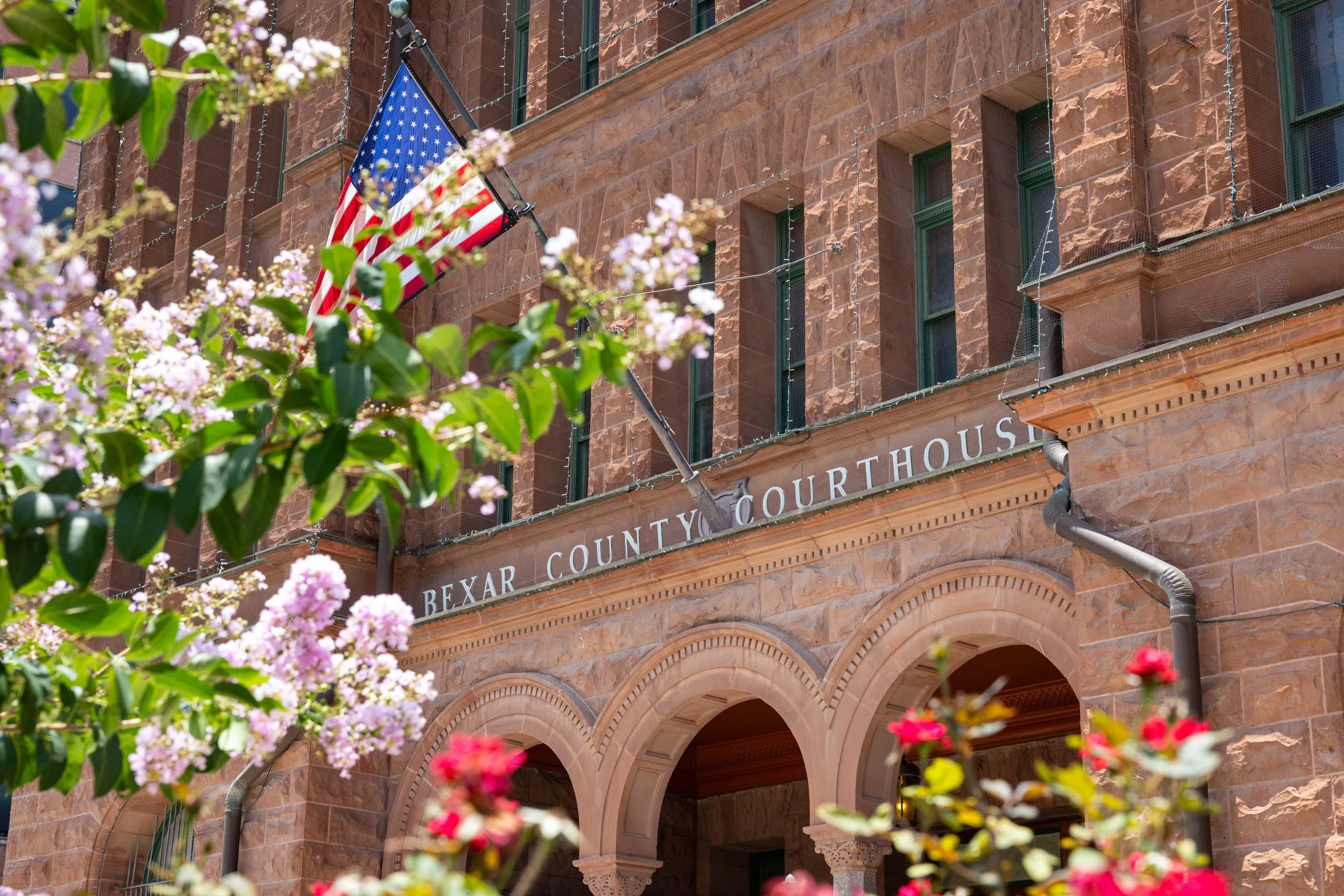
Of the who originally filed to run for office in Bexar County this year, only one managed to collect enough signatures to get his name on the November ballot.
Read more Pro Movers and Storage — Your Trusted Moving Company
Defense attorney Jason Wolff is waging an independent bid for District Attorney, against Democrat Luz Elena Chapa and Republican Ashley Foster.
The Secretary of State’s office that Wolff had successfully gathered at least 500 signatures from Bexar County voters — making him one the few candidates in all of Texas to qualify for the November ballot without the nomination of a political party.
“It was 30 days of — when I wasn’t at work — going out and being on the street or going into restaurants and going to flea markets and getting signatures,” said Wolff, who estimated he’s spent about $2,000 so far on his campaign. “I had my wife help me, and I had [a] campaign coordinator, and then I had friends and family members circulating petitions. So it was difficult.”
Independent and third-party candidates rarely win in November, but they frequently shape how major party candidates approach a race.
For example, Texas Republicans have long worried about Libertarian candidates peeling off limited government supporters who don’t like the GOP’s approach on social issues, so they’ve sued to try to keep them off the ballot in recent years.
Independent candidates say they also face pushback from a political establishment that doesn’t want them to qualify — causing one of this year’s candidates to sue the state challenging Texas’ signature requirements.
Most races require independents to collect 500 signatures from voters who didn’t participate in the Republican or Democratic primary election, all of which must be collected between the end of the primary in their race and the June 25 deadline.
If either party’s primary went to a runoff in that race, as Bexar County’s District Attorney race did, the collection window for independent candidates goes from a few months to a few weeks. In Wolff’s case, it left just 30 days to collect signatures.
For statewide candidates, more than 80,000 signatures are required — something no modern candidate has ever achieved.
Of the 125 independents who signed up to run months ago, many said they spent real time and money campaigning — before realizing how difficult it would be to find enough signatures in the short window.
In the end, no independents qualified for the ballot in any of Texas’ statewide contests or contested congressional races.
Two independents made the cut in Hayes County, including a former Democratic county judge who is running for her old seat, and a candidate in the DA race.
In Texas Senate District 1, representing East Texas, a public school superintendent submitted 640 signatures to run as a “conservative” independent, but was told that he’d fallen 22 short after removing the unqualified or duplicate signatures.
Mike Collier, who has been campaigning as an independent candidate for Lieutenant Governor in Texas, skipped the signature collection and is now part of with the Forward Party and the Center for Competitive Democracy, challenging whether Texas can maintain such steep requirements.
They filed a preliminary injunction on June 25, and expect to have a response from the state in the coming weeks.
Read more The Spurs want input on a downtown arena district. San Antonians are eager to weigh in.
“[Getting on the ballot] was a long process and it wasn’t easy, so I understand why people running statewide who need 80,000 signatures see it as an impossibility,” said Wolff, who collected about 1,100 signatures and had just 710 confirmed.
“I’m happy to see that one of the candidates is moving forward with the lawsuit to try to get that changed.”
A tough landscape for a former Republican
Like others who were successful in getting on the ballot as independents this year, Wolff benefitted from some built-in brand recognition: He’s the nephew of former Bexar County Judge Nelson Wolff, and he was elected to a county court judgeship as a Republican in 2010 and 2014.
In more recent years, Republican judges have been shut out in solidly blue Bexar County, and Wolff lost two attempted comeback bids in 2018 and 2022.
“People can’t have a civil conversation with one another if they think that they can identify what’s in your heart or based on your party affiliation,” Wolff said in an interview Monday. “I think it’s dividing this country [and] this county, so that’s why I’m running as an independent.”
Bexar County hasn’t elected a Republican to a countywide office in more than a decade, and this year struggled to even field a GOP candidate for county judge.
But the Republican party did recruit a District Attorney candidate they’re excited about in Foster, and Wolff faces a challenging race in a three-way contest this November.
Unlike the primary election, which advances to a runoff if no candidate takes at least 50% in the first round, the general election will be decided by a simple majority.
Chapa won an expensive Democratic primary runoff for her party’s nomination to replace retiring District Attorney Joe Gonzales, and enters the now three-way general election race as the heavy favorite.
Few third-party or independents in Texas’ targeted 2026 races
This year the battle for the U.S. House and Senate both run through Texas, where independent and third-party candidates could play a role in close races.
But now that the ballot is largely set, few independents, Green Party candidates or Libertarians are expected to appear in the most hard-fought races, including the San Antonio-area 35th and 23rd Congressional Districts, in which Democrats are targeting.
The Libertarian Party, which aligns more closely with conservatives, has a candidate in Texas’ 34th Congressional District, where national Republicans are spending big to target U.S. Rep. Vicente Gonzalez (D-McAllen).
It also has contenders in nearly all of the statewide races on the ballot in 2026, including the governor’s race and the U.S. Senate race.
The Green Party, which aligns more closely with left-leaning values, doesn’t have a candidate in the contested congressional races or the U.S. Senate contest between Ken Paxton and James Talarico.
It has candidates in statewide races for comptroller, agriculture commissioner and lieutenant governor, as well as one local candidate: Julián Villarreal, who is running in state Senate District 26, where incumbent state Sen. José Menéndez (D-San Antonio) didn’t draw a Republican challenger.
Read more One person killed in flooding at JBSA-Lackland, more rain expected