For years, advocates have argued that San Antonio needed a place where parents facing an emergency could safely leave their children before a temporary crisis turned into abuse, neglect or a call to Child Protective Services.
Read more Appeals court rejects effort to defend Texas law offering in-state tuition for undocumented students
Now, that idea appears to be gaining traction from two directions.
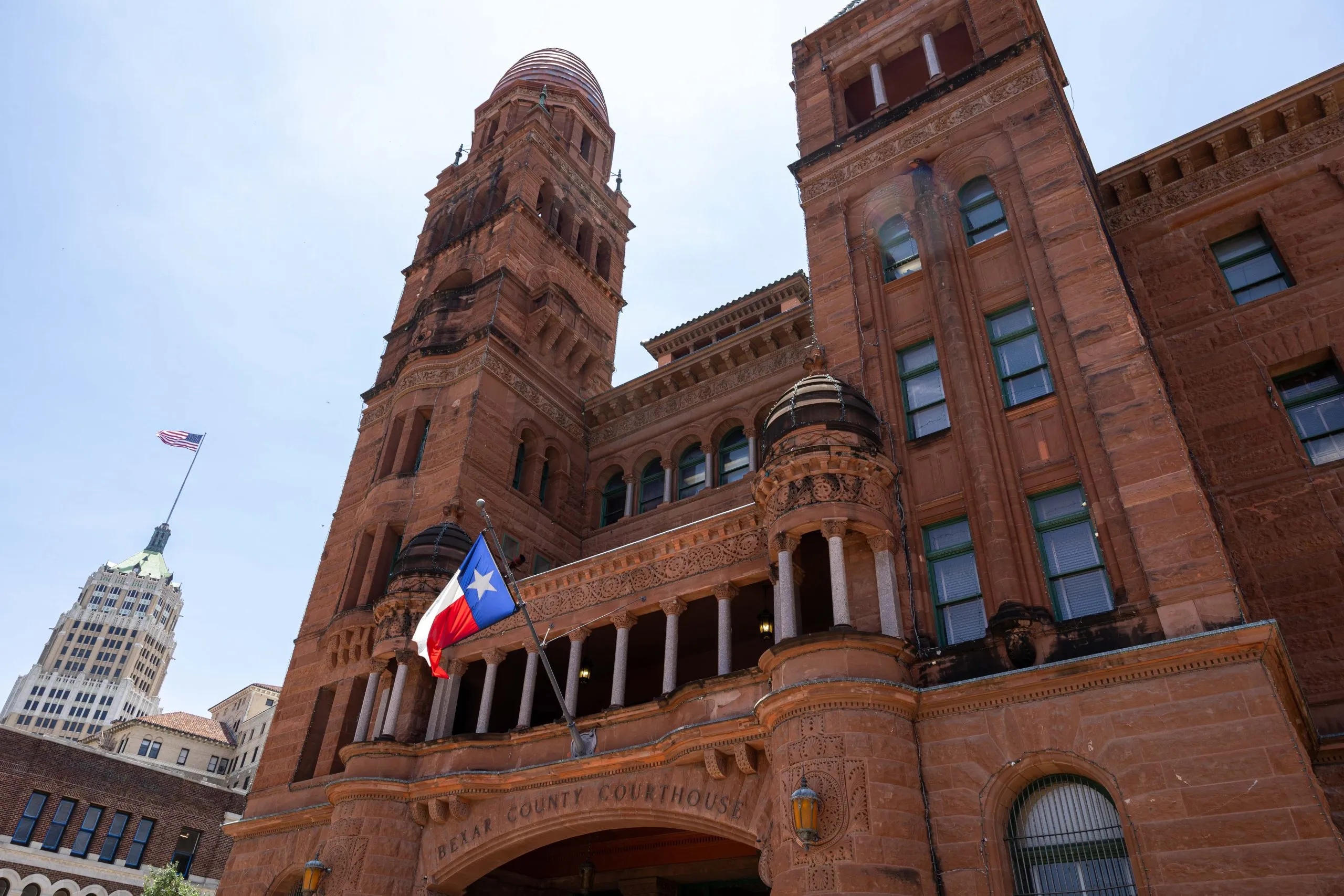
Last week, Bexar County commissioners directed staff to explore creating a county-supported crisis nursery, while a coalition of local nonprofits says it has already spent the past eight months quietly operating its own collaborative version of the model as it waits for the City of San Antonio to release a long-completed feasibility study.
A crisis nursery is a voluntary, licensed program that provides short-term care for children while parents or caregivers address an emergency such as a hospitalization, mental health crisis, domestic violence, housing instability or another situation that temporarily prevents them from safely caring for their children.
Unlike foster care, parents do not relinquish custody. Instead, families voluntarily seek help before a crisis escalates to the point that law enforcement or Child Protective Services must intervene.
“The key word here is temporary,” Barbara Schaffer, director of strategic planning with the Bexar County Manager’s Office, told commissioners. “Families are not giving up custody, and children aren’t entering foster care.”
While children receive care in a safe, licensed setting, parents are connected with services ranging from housing assistance and behavioral health treatment to child care resources and substance use treatment. Once the crisis has stabilized, children return home.
County officials described the model as one that fills a gap first responders encounter every day.
Without a crisis nursery, Schaffer said, children caught in family emergencies may spend hours riding in patrol cars while deputies search for relatives, remain in hospital emergency departments despite having no medical needs or wait in Child Protective Services offices until placement can be arranged.
Bexar County Sheriff Javier Salazar said the situation is a frustrating one for first responders who routinely find themselves caring for children during some of the worst moments of a family’s life.
“You know that taking up a collection from your fellow officers to buy formula, baby food, diapers, whatever it is that that child needs in that moment isn’t the most ideal situation,” Salazar told commissioners. “ But it’s all we got, and as first responders, we do what we have to do.”
Commissioners directed staff to return with recommendations on how a county program could operate, what procurement method should be used and what organizations could potentially provide the service.
If ultimately approved, county officials said the effort could be funded using roughly $1.6 million previously budgeted to support Child Protective Services family-based safety services caseworkers. Since the state has assumed responsibility for those positions, county leaders are now exploring whether those dollars could instead be redirected toward preventing families from entering the child welfare system in the first place.
But the idea itself is far from new.
In 2024, a coalition of San Antonio nonprofits approached the City of San Antonio seeking support to launch a local crisis nursery. Instead of funding the concept, the city commissioned a feasibility study to examine how such a program could operate in San Antonio.
According to city procurement documents, the study was intended to help develop a business plan and long-term strategy for establishing a crisis nursery in the community.
More than a year and a half later, however, the report has yet to be released publicly.
When asked last week about its status, the city’s Department of Human Services said the draft report remains “pending review by City Manager and Council members.” The department did not provide a timeline for when the study would be presented publicly.
Rather than waiting for the city’s study to be released, the nonprofit coalition moved forward on its own.
Now operating as the Safety Nest Network, the collaboration includes ChildSafe, AVANCE, YMCA of Greater San Antonio, YWCA San Antonio, Family Service Association, St. Jude’s Ranch for Children, Belong Community-Based Care, UT Health San Antonio and Respite Care of San Antonio.
“For nearly 25 years, every time a crisis nursery came up, everybody agreed it was a great idea, but it never got off the ground,” said Rebecca Helterbrand, president and CEO of Respite Care of San Antonio.
So the coalition took it upon themselves to investigate why. After researching and visiting crisis nurseries across the country, they learned that most operate as a single nonprofit supported by major capital campaigns and ongoing philanthropic investments. However, Helterbrand said the coalition concluded that model wasn’t the right fit for San Antonio.
“San Antonio is just not built for that kind of philanthropic investment, whether it’s public, private, foundations, individuals, etc.” Helterbrand said. “So, over and over again, this concept came up, and San Antonio was unable to pull it off, even though they agreed this evidence-based approach that worked in other states could work here.”
So the coalition decided to take a different approach, one that Helterbrand describes as “Puro San Antonio.”
“San Antonio is deeply known for its collaborative nature,” Helterbrand said. “We’ve had to band together because we don’t have all the resources we need, and nonprofits lead the way in creating partnerships and collaborations.”
So instead of building one standalone organization, the coalition looked at the services already available across the city and asked how they could function as a single system. The result is what Helterbrand describes as a “San Antonio twist” on the evidence-based crisis nursery model.
Families enter through one coordinated network and are assessed based on the level of help they need. Some receive intensive case management to stabilize housing, employment or behavioral health needs. Others are connected with emergency drop-in child care while they resolve an immediate crisis. The most serious situations involve temporary voluntary residential care for children while parents deal with emergencies like recovering from surgery, completing substance use treatment or escaping domestic violence.
Helterbrand said this collaborative approach has attracted more than $500,000 in philanthropic support, including a statewide funder that believes the model could eventually be replicated in other Texas communities.
The coalition has already begun putting that model into practice.
Helterbrand said the Safety Nest Network has been operating for roughly eight to nine months, helping families navigate crises before they reach the point of child abuse investigations or foster care involvement.
Among those families, she said, was a father recovering from cancer surgery who needed temporary care for his son with autism while he underwent treatment. Another mother recovering from a double mastectomy was able to keep her children out of foster care while she healed. The network has also helped a mother experiencing homelessness stabilize her family through case management and temporary child care.
Families interested in learning whether the Safety Nest Network can help with their situation can call 210-638-8395 to inquire about available services and eligibility.
The coalition plans to expand that work on Aug. 18 with the opening of a new residential home that will add 12 beds to the network, increasing its residential capacity to 42 beds for children whose families need temporary voluntary placement during a crisis.
Even with the expansion, Helterbrand said the network is not yet operating at the scale community leaders envisioned. Despite the half a million of support the coalition has raised to date, she said additional funding is still required to meet the need in Bexar County.
“We’re not at scale, which is why we were very excited to hear about Bexar County’s decision,” she said. “We are doing this work. It is working. We are helping families.”
In hopes of scaling up that work, the coalition has already reached out to county officials following last week’s Commissioners Court vote. The coalition hopes to discuss how the existing Safety Nest Network could fit into the county’s plans as staff develops recommendations for a publicly-supported crisis nursery.
County staff are expected to return in August to commissioners court with recommendations on a procurement process and potential service providers before the court considers whether to establish a county-supported program.
Read more Here’s how Bexar County plans to avoid a tax increase while others raise rates