Mega Texas cities like Dallas-Fort Worth and Houston are home to regional business coalitions formed years ago to tackle common issues.
Read more Andrew Fuentes will be Mayor Jones’ new permanent chief of staff
Even El Paso has one spanning the international border.
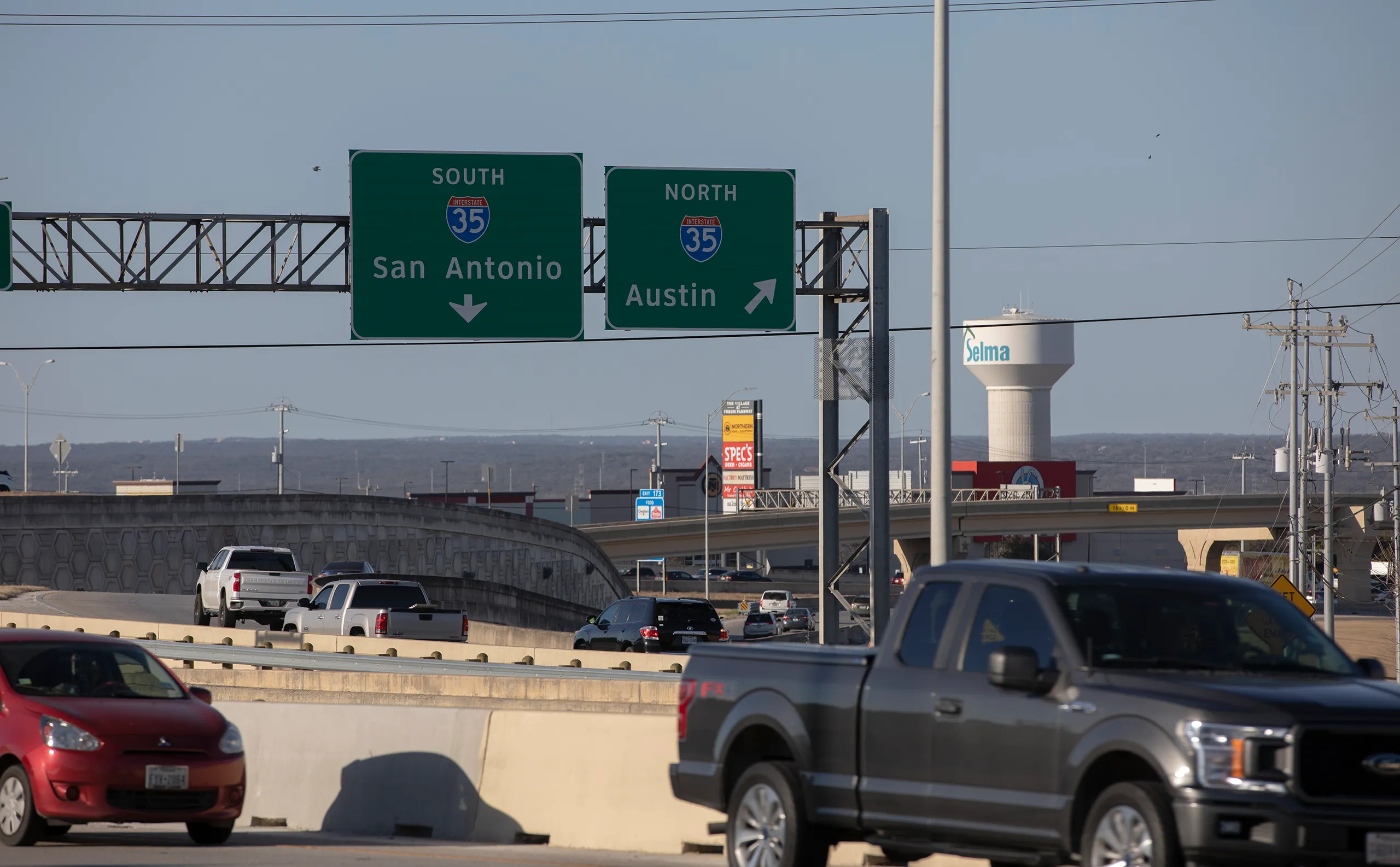
Now San Antonio and Austin, large metroplexes bookending one of the fastest growing regions in the nation, are following suit with the Central Texas Alliance.
Formed only months ago, the Central Texas Alliance is a coalition of civic, business, economic development, academic and community leaders founded to support the Austin-San Antonio corridor and a 13-county mega region.
The nonprofit also has a newly-appointed CEO, A.J. Rodriguez, who is currently transitioning from his role as executive vice president for the public policy and advocacy organization, Texas 2036.
Unlike other major cities in the state, Central Texas has not been served by one entity that works to develop consensus around priorities for the region, Rodriguez said.
The goal of the Alliance is to convene civic, business, economic development, academic and community leaders to form one voice on behalf of a region made up of 120 municipalities.
In other words, “What can we do cohesively together that not one city or county could do alone?” Rodriguez said.
Texas is considered the fastest growing economy and population in the nation. The Austin-San Antonio corridor, with a population of 5.3 million, is on target to add 3 million more residents by 2050, according to census data.
“Those facts tell us that it’s time for the Central Texas Alliance,” stated Henry Cisneros, former Secretary of Housing and Urban Development and four-term San Antonio mayor (1981–89).
Cisneros co-authored with Robert Rivard and David Hendricks, “The Austin-San Antonio Megaregion: Opportunity and Challenges in the Lone Star State,” published in September. The book outlines how projected growth will put demands on housing, energy and water resources, mobility infrastructure, and the region’s workforce.
“The first thing to do when you see the numbers is then to look at the implications, and the implications are that growth demands to be addressed, and to pick the areas of significance,” Cisneros said on a 2025 episode of the podcast, Big City Small Town. “Obviously, traffic and congestion is one that’s immediately obvious.”
Addressing the impact of growth has been, to some degree, left untended. “There is really no entity where people are getting up every morning saying, ‘It’s my job to think about the implications of this unprecedented growth and the opportunities and challenges that it creates,’” Rivard added.
Cisneros is founder of the Alliance, which is modeled after the North Texas Commission and the Greater Houston Partnership. Both groups rely on member support for funding.
Read more Texas Hill Country Flood Relief Fund launches as catastrophic flooding devastates region
The Central Texas Alliance will focus on seven issue areas, Rodriguez said, including transportation, water resources, housing, workforce development, energy resilience, healthcare and land stewardship and planning.
Such collaboration on a regional scale has been discussed among Austin-San Antonio corridor leaders for more than two decades, Rodriguez said.
“But each of the entities is doing their own thing, and they’re busy … serving their own constituencies, which is what they’re supposed to do,” he said. “I think what’s changed in the urgency is really the scale, the pace of growth, that we’re experiencing.”
The Alliance is led by co-chairpersons Gary Farmer, president of Heritage Title Company of Austin and founder and former chairman of Opportunity Austin, and Jenna Saucedo-Herrera, head of corporate impact at USAA and former president and CEO of the economic development nonprofit, Greater:SATX.
While San Antonio and Austin have historically had competing interests when it comes to attracting business and economic development, the two cities also bring complementary strengths, Rodriguez said.
Additionally, the organization spans the broader region beyond those cities to other rapidly growing counties, from Williamson to Atascosa and Bandera to Bastrop.
Saucedo-Herrera said unifying voices across the region positions it for successful growth. “We know that the seven regional priorities that we’ve identified … are regional challenges that no single city or county can effectively address alone but that the region needs,” she said.
The Alliance is not a chamber of commerce or an economic development entity, Rodriguez said, but will work with those organizations throughout the region. He also expects the group to have a seat at the table with the state’s other mega region advocacy groups like it, “to think about how we promote Texas in an even larger way in the future.”
In the meantime, the organization will be collecting data and convening leaders to advocate for the region’s needs at the state and federal level, he said.
The Alliance launches Sept. 18 at an event to be held at Texas State University-San Marcos, where more than 100 leaders from across the region are expected to discuss priorities for the 2027 legislative session. A board of directors will be formed following the event.
Disclosure: A.J. Rodriguez is immediate past chairman of the San Antonio Report board of directors.